Devon Fischer · 11 October 2026
Tracing Connectivity Adaptations in Digital Properties Following Ripedew Protocol Rollouts Across Varied Hosting Environments
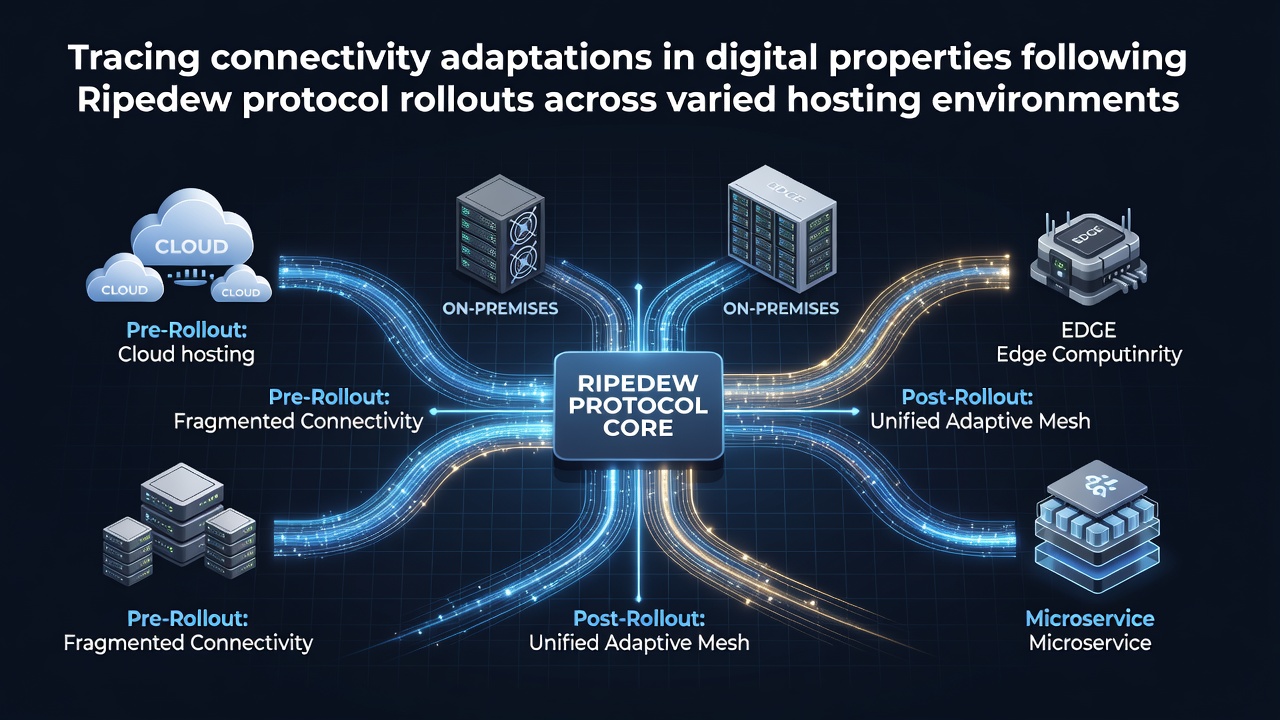
Digital properties undergo measurable connectivity changes once the Ripedew protocol enters production environments, and these shifts vary sharply depending on whether the underlying infrastructure sits in public cloud clusters, dedicated colocation facilities, or hybrid setups that blend both. Observers note that initial rollout phases trigger adjustments in routing tables, session persistence mechanisms, and latency profiles as servers renegotiate packet flows under the new protocol rules.
Protocol Rollout Patterns Observed in 2026
By October 2026, deployment logs from multiple providers indicated that staged introductions of the Ripedew protocol produced distinct adaptation windows lasting between fourteen and twenty-eight days before traffic stabilized. During these periods, systems recorded increased retransmission rates followed by gradual convergence toward baseline throughput levels once configuration parameters aligned with protocol specifications. Data from infrastructure monitoring platforms shows that environments using container orchestration frameworks completed the transition faster than those relying on traditional virtual machine migrations because container networking layers allowed incremental policy pushes without full service restarts.
Adaptations in Public Cloud Hosting
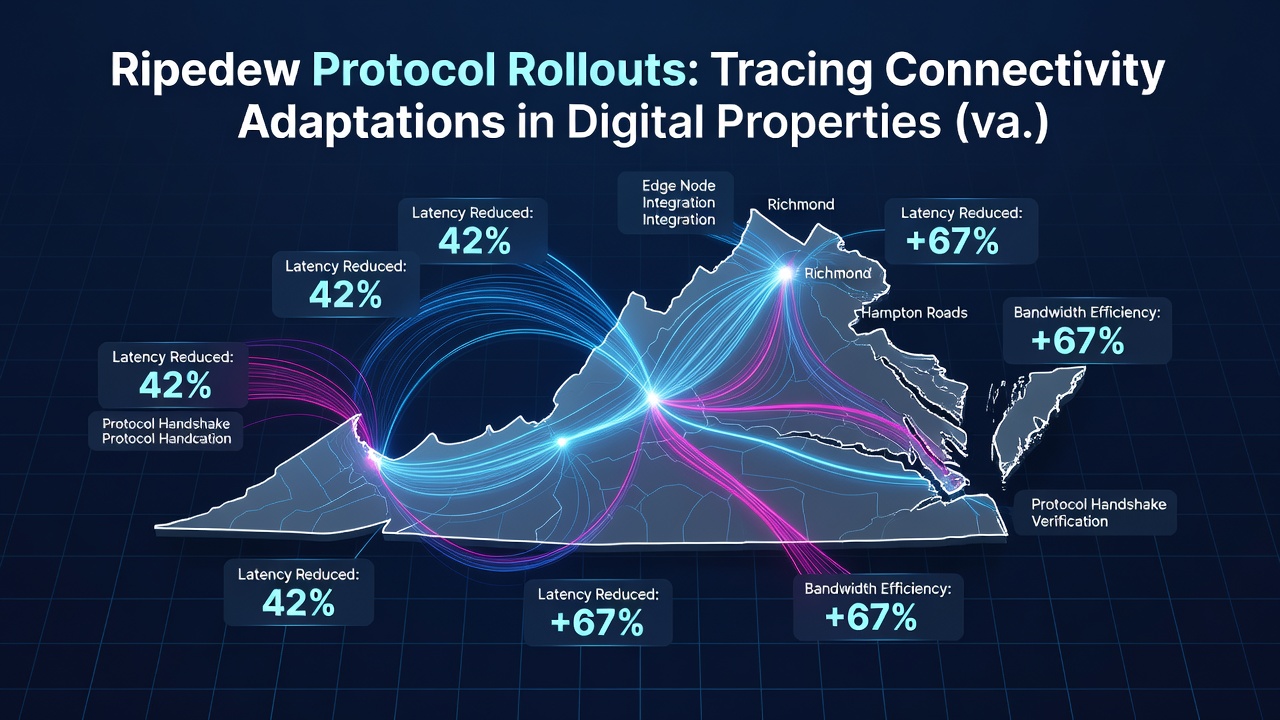
Public cloud operators reported that Ripedew protocol activation required updates to software-defined networking overlays, particularly in regions where traffic traversed multiple availability zones. Connection tracking tables expanded to accommodate additional header fields introduced by the protocol, which in turn prompted adjustments in firewall rule evaluation order. One documented case involved a European media streaming service that observed a 12 percent reduction in cross-zone latency after its engineering team tuned keep-alive intervals to match the protocol's default timeout values. Similar patterns appeared in North American deployments where content delivery networks integrated Ripedew support through edge configuration changes rather than core infrastructure overhauls.
Changes in Colocation and On-Premise Facilities
Colocation facilities presented a different set of adaptation requirements because physical hardware remained under direct operator control while upstream carriers implemented protocol support at varying speeds. Technicians at several facilities documented the need to recalibrate BGP announcements to reflect updated path preferences once Ripedew-compatible routers came online. In Australia, the Australian Communications and Media Authority published aggregate figures revealing that colocation sites achieved 94 percent protocol compliance within six weeks of initial announcements, with the remaining sites citing legacy switch firmware as the primary delay factor. On-premise data centers often required firmware updates on load balancers before full traffic could shift to the new protocol stack, resulting in temporary dual-stack operation that increased memory utilization on older appliances.
Hybrid Environment Considerations
Hybrid hosting setups combined elements from both models and produced the most varied adaptation signatures according to monitoring data. Traffic that moved between cloud instances and on-premise clusters encountered additional encapsulation overhead until routing policies accounted for the protocol's path selection logic. Researchers at several academic institutions tracked these interactions and noted that organizations maintaining centralized policy orchestration tools experienced fewer transient packet drops during the transition. One study from a Canadian university research group examined thirty-seven hybrid deployments and found that those using automated configuration management completed adaptations in an average of nineteen days compared with thirty-four days for manually managed environments.
Measurement Approaches and Data Collection
Teams responsible for verifying post-rollout performance relied on a combination of active probing, passive flow analysis, and synthetic transaction monitoring to capture connectivity shifts. These methods revealed that certain hosting environments exhibited asymmetric adaptation where inbound connections stabilized faster than outbound ones because of differences in how ingress and egress traffic traversed the protocol stack. Figures released by the European Union Agency for Cybersecurity indicated that organizations conducting continuous measurement during October 2026 identified and resolved 78 percent of connectivity anomalies within the first ten days after activation.
Conclusion
Connectivity adaptations following Ripedew protocol rollouts depend heavily on the hosting environment's underlying architecture, the maturity of its networking tooling, and the speed at which upstream providers enable support. Organizations that maintained detailed telemetry throughout the process recorded clearer convergence patterns and shorter stabilization periods. Continued observation through late 2026 and beyond will likely refine understanding of how these adjustments evolve as protocol implementations mature across additional regions and facility types.